


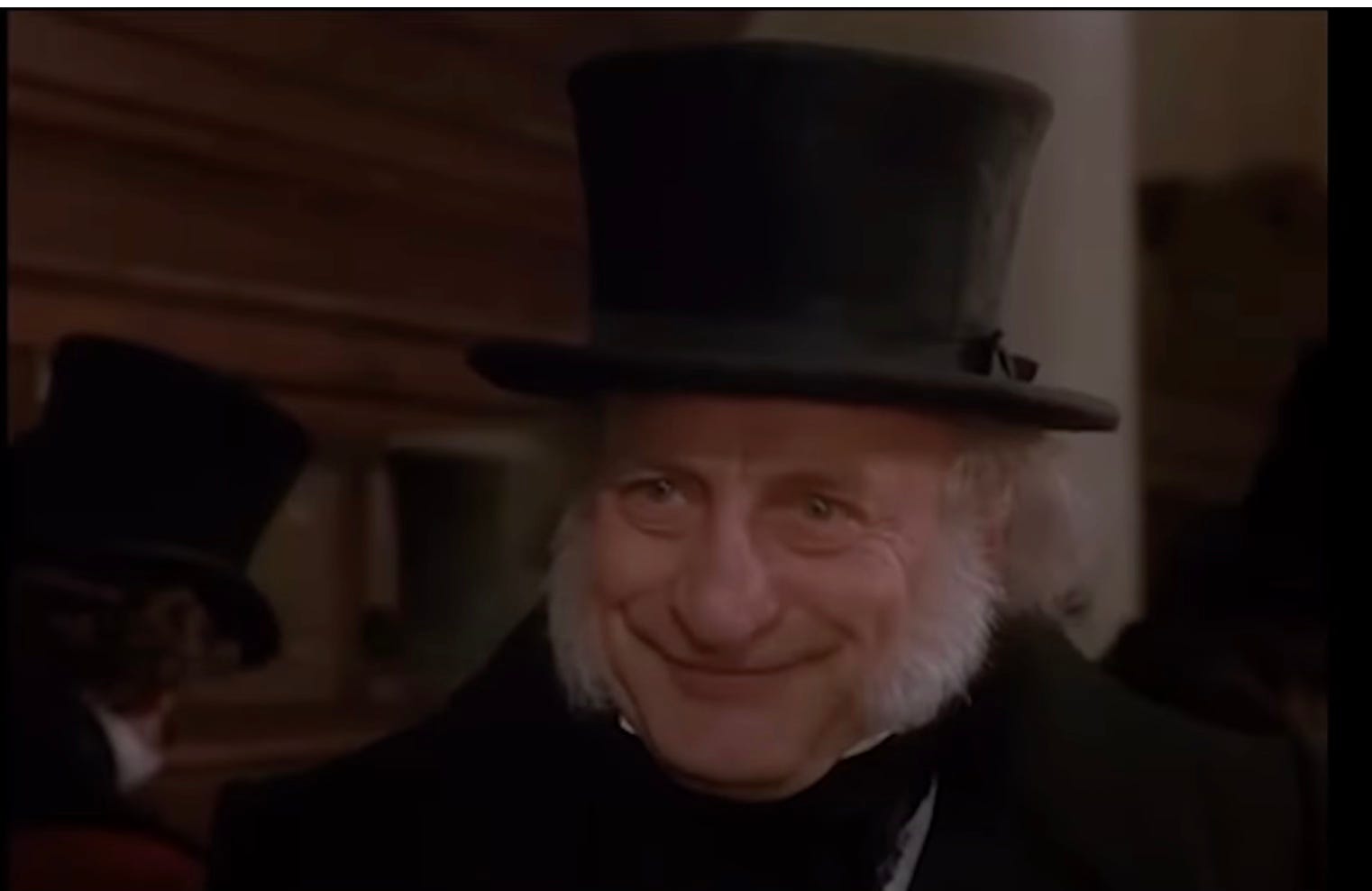
Christmastime is here, but happiness and cheer are in somewhat short supply. Donald Trump and Republicans in Congress have enacted economic policies that would horrify Scrooge more than any ghost. According to Forbes, 2025 is one of the worst years for job losses in more than a decade. Inflation and grocery prices are both up, despite Trump’s lies to the contrary.
“For many, the holidays this year means having to make do with less,” NPR reports. PBS adds to the grim picture: “Rising prices and government cutbacks leave food banks struggling nationwide”
People who had their SNAP benefits disrupted due to the government shutdown are still waiting for payment from last month. Many have only received half of what they normally receive.
NPR interviewed Steve Posey and his wife India, who are finding it hard to summon up the Christmas spirit.
“[Economic conditions] kind of takes away from the joy,” he said. “I don’t feel it this year. To be honest, I’m just trying to stay above water.”
Despite the MAGA rhetoric, the Poseys aren’t deadbeats demanding handouts. They both have jobs. Posey is a case manager at a veterans’ organization, and India works in child care. They’re still treading water and are in danger of slipping under. Their Thanksgiving dinner was a turkey and some canned goods from a local pantry. I repeat: They both have jobs, important jobs. They aren’t at home playing video games — the GOP’s current slander about the working poor.
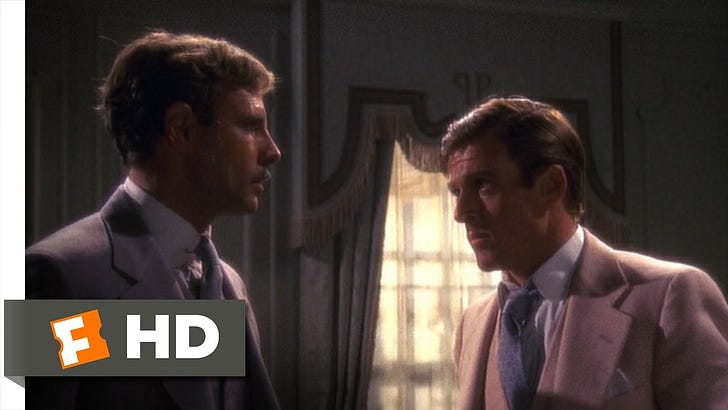
Trump literally threw a decadent Great Gatsby party during the government shutdown, while actively trying to take food out of poor people’s mouths. Even before the shutdown, the GOP agenda was openly hostile to the poor. Congressional Republicans passed a budget that will reduce SNAP funding by about $186 billion over 10 years. This 20 percent cut is the largest in the program’s history.
Sara Bleich, a professor of public health policy at Harvard University, told Rolling Stone, “There is a general feeling by the Trump administration that SNAP and Medicaid programs are overly generous and that they are not needed by the recipients who receive them.”
This contempt for the less fortunate recalls Ebenezer Scrooge’s response to the men collecting for the poor on Christmas Eve:
“Are there no prisons?” asked Scrooge.
“Plenty of prisons,” said the gentleman, laying down the pen again.
“And the Union workhouses?” demanded Scrooge. “Are they still in operation?”
“They are. Still,” returned the gentleman, “I wish I could say they were not.”
“The Treadmill and the Poor Law are in full vigour, then?” said Scrooge.
“Both very busy, sir.”
“Oh! I was afraid, from what you said at first, that something had occurred to stop them in their useful course,” said Scrooge. “I’m very glad to hear it.”
Charles Dickens didn’t craft Scrooge out of whole cloth. He expressed sentiments that were disturbingly commonplace during Dickens’ time (and ours). “Social reformers” such as Jeremy Bentham argued that the handing out food and temporary shelter to everyone who needs them would only encourage poverty.
The Poor Law Amendment Act of 1834 was intended to put an end to the “dole.” The supposed “able-bodied” poor would only receive help in at the union workhouse. This sounds very familiar to the GOP’s demand for “work requirements” before the poor are deemed deserving enough for assistance.
The gentleman reacts strongly to the “union workhouses,” because when Dickens wrote A Christmas Carol, they had become a refuge for the elderly, sick, and disabled — likely where Tiny Tim would’ve wound up even if he’d lived. These were obviously not people the government should press into backbreaking service for a few scraps of bread.
The “treadmill” was an “everlasting staircase” that prisoners walked on for hours each day with straps and weights attached to provide resistance. This was intended to teach the “idle” poor “habits of industry.” It presumably worked wonders for their calf muscles before they died from exhaustion.
The “Poor Law” addressed the problem of “vagrants and beggars,” but a decade prior to A Christmas Carol’s publication, the Poor Law Amendment Act overhauled the system to appeal to voters like Scrooge. The needy could only receive assistance within a workhouse, where the conditions were deliberately miserable so as to discourage people from going. That puts one of Scrooge’s more infamous lines in an even harsher context:
“I wish to be left alone,” said Scrooge. “Since you ask me what I wish, gentlemen, that is my answer. I don’t make merry myself at Christmas and I can’t afford to make idle people merry. I help to support the establishments I have mentioned—they cost enough; and those who are badly off must go there.”
“Many can’t go there; and many would rather die.”
“If they would rather die,” said Scrooge, “they had better do it, and decrease the surplus population.”
Most stage and screen adaptations end here, but in the book, Scrooge adds feebly that he “doesn’t know” that people would rather die than go to the workhouses, even when they are structured by design to ensure just that.
Scrooge’s callous remarks don’t exist in a value. English economist Thomas Malthus believed poverty and starvation weren’t just unavoidable — rather than a deliberate outcome of the period’s rampant income inequality — but necessary. Society can’t provide for everyone, so why bother: Death would remove the “undesirables” from the population. Anyone who couldn’t sustain themselves from help didn’t deserve to live. (Malthus himself could’ve benefited from a ghostly intervention.)
Malthus argued that “preventive checks,” such as moral restraint, delayed marriage, and celibacy, would limit population growth and keep the poor in limited supply. Scrooge had sneered at Bob Cratchit, who earns “15 schillings a week” (about 600 pounds today, marrying and having five kids, all of whom with limited economic prospects. In both Scrooge and Matlhus’s eyes, Cratchit’s miserable existence selects his lack of “moral restraint.”
A redeemed Scrooge raises Cratchit’s salary in recognition of his personal need. Republicans today sneer at the liberal assertion that every job deserves a “living wage.” Your Fox News talking head would inist that a 21st Century Bob Cratchit chose to have a big family, including a sick kid, and that’s his personal problem not his employer’s. Scrooge should just hire a student intern.
Of course, today’s Republicans always sound more like Scrooge than humble lowercase Christ. Pre-reformation Scrooge at least is no hypocrite. He offers no Christian charity on the holiday but he doesn’t indulge in Christmas cheer, either. He could have enjoyed a hearty meal and a cozy fire at his nephew Fred’s house, while leaving Bob Cratchit to suffer in silent poverty. Too many people today think they are better than Scrooge simply because they deck the halls, sing carols, and otherwise celebrate their own good fortune while conveniently forgetting those who are without.
Later, Scrooge is an unseen visitor at the Cratchit family Christmas. Their own humanity stokes the dying embers within his soul, but when he expresses concern for Tiny Tim, the Ghost of Christmas Present turns Scrooge’s callous words against him. (Watch below this clip from the George C. Scott version, which first aired on December 17, 1984.)
“If these shadows remain unaltered by the Future, none other of my race,” returned the Ghost, “will find him here. What then? If he be like to die, he had better do it, and decrease the surplus population.”
Scrooge hung his head to hear his own words quoted by the Spirit, and was overcome with penitence and grief.
“Man,” said the Ghost, “if man you be in heart, not adamant, forbear that wicked cant until you have discovered What the surplus is, and Where it is. Will you decide what men shall live, what men shall die? It may be, that in the sight of Heaven, you are more worthless and less fit to live than millions like this poor man’s child. Oh God! to hear the Insect on the leaf pronouncing on the too much life among his hungry brothers in the dust!”
In the 1984 adaptation, Edward Woodard’s Ghost of Christmas Present didn’t hide his contempt for Scrooge. He forces him to confront more of the “surplus population,” those whose Christmas Day is spent without the comfort of even a meager dwelling. “What does it have to do with me?” Scrooge asks, and a furious Present bellows, “Are they not of the human race!”
The 1984 A Christmas Carol is the first one I saw as a child, and I’m still moved whenever I watch the great Roger Rees as Fred defend Christmas to his obstinate uncle. The film keeps most of his speech intact, but his full words from the book are worth repeating and remembering, especially this year when even good people are tempted to harden their hearts.
“There are many things from which I might have derived good, by which I have not profited, I dare say,” returned the nephew. “Christmas among the rest. But I am sure I have always thought of Christmas time, when it has come round—apart from the veneration due to its sacred name and origin, if anything belonging to it can be apart from that—as a good time; a kind, forgiving, charitable, pleasant time; the only time I know of, in the long calendar of the year, when men and women seem by one consent to open their shut-up hearts freely, and to think of people below them as if they really were fellow-passengers to the grave, and not another race of creatures bound on other journeys. And therefore, uncle, though it has never put a scrap of gold or silver in my pocket, I believe that it has done me good, and will do me good; and I say, God bless it!”
Marley’s ghost tells Scrooge, “Why did I walk through crowds of fellow-beings with my eyes turned down, and never raise them to that blessed Star which led the Wise Men to a poor abode! Were there no poor homes to which its light would have conducted me!” No compassionate light guides today’s Republican Party, which puts a performative CHRIST in Christmas but remains an irredeemable Scrooge at heart.
The first version I saw was the Mister Magoo animated special and not knowing the story it was based on I thought “wow, this is pretty deep stuff for Mister Magoo”.
Fun fact—the guy Dickens modeled Scrooge on was stingy when it came to spending on himself (wore threadbare clothes, lived in a modest house, rarely spent anything on himself) but was reportedly generous with others, known for lending money and never asking for it back and giving things away. Sort of a combination pre-ghosts and post-ghosts Scrooge.
Last spring, while visiting London, I stayed in a hotel near the Charles Dickens Museum. The Museum is located in Dickens' first home, where he lived with his wife and first child and wrote Oliver Twist. It is located just north of the City of London. Dickens needed visuals to fuel his imagination, and where he lived gave him easy access to them -- the City, the Courts, the dark and cramped places of the poor, the great charitable organizations like the Foundling Hospital and the Charterhouse (an old folks home which has operated since the 16th century). It was incredibly moving to walk where he went and to see what he saw.