


Dr. Martin Luther King lived for less than 40 years, but he left behind a substantial legacy, including verbal and written statements detailing his positions on complex issues. So, it’s always frustrating when it seems as if conservatives only recall that one line from his famous speech at the March on Washington: “I have a dream that my four little children will one day live in a nation where they will not be judged by the color of their skin but by the content of their character.” Conservatives have invoked this line to defend Supreme Court Chief Justice John Roberts’ entire judicial philosophy, particularly regarding affirmative action and the Voting Rights Act.
However, the left is equally guilty of taking Dr. King’s words out of context. These days, you can’t scroll social media for long without coming across this passage from Dr. King’s slightly less famous Letter From A Birmingham Jail:
I must make two honest confessions to you, my Christian and Jewish brothers. First, I must confess that over the past few years I have been gravely disappointed with the white moderate. I have almost reached the regrettable conclusion that the Negro’s great stumbling block in his stride toward freedom is not the White Citizen’s Counciler or the Ku Klux Klanner, but the white moderate, who is more devoted to “order” than to justice; who prefers a negative peace which is the absence of tension to a positive peace which is the presence of justice; who constantly says: “I agree with you in the goal you seek, but I cannot agree with your methods of direct action”; who paternalistically believes he can set the timetable for another man’s freedom; who lives by a mythical concept of time and who constantly advises the Negro to wait for a “more convenient season.” Shallow understanding from people of good will is more frustrating than absolute misunderstanding from people of ill will. Lukewarm acceptance is much more bewildering than outright rejection.
Upon this rock, many on the left have built their own church of aggressive, unyielding activism. Thus, they are quick to cite this Dr. King line as the ultimate checkmate against any call for a measured political response to any issue. Over the years, many Democratic politicians, including Joe Biden and curiously Kamala Harris, have been dismissed as one of those contemptible “white moderates” who prefer an easy, tension-free “negative peace” to a more demanding “positive peace.” They “just want to have brunch again.”
It’s true that Dr. King was far more radical than the sanitized version discussed in most history classes, but he also wasn’t the political equivalent to a bull in a china shop. He was an ever careful strategist, who considered the impact of his actions and words.
Perhaps Dr. King’s savviest political tactic was remaining apolitical. He refused to endorse specific candidates or formally ally with either Democrats or Republicans. He did break this longstanding policy in the 1964 election, when he warned about the threat Republican Barry Goldwater posed to civil rights progress. It’s also worth noting that Dr. King didn’t abandon Lyndon B. Johnson, despite his escalating U.S. involvement in Vietnam.
What’s often overlooked if not outright ignored about Dr. King’s Letter From A Birmingham Jail is that he addresses the searing message to “My Dear Fellow Clergymen” and not to “You Clueless Fucks.” Dr. King consistently employed what was described as “radical civility,” and it was perhaps his most potent tool. He was direct and morally unwavering, but he always made clear that his enemy was a corrupt system, never people themselves. Such civility in the face of true oppression and cruelty often requires just as much will and discipline — if not more — than non-violent resistance.
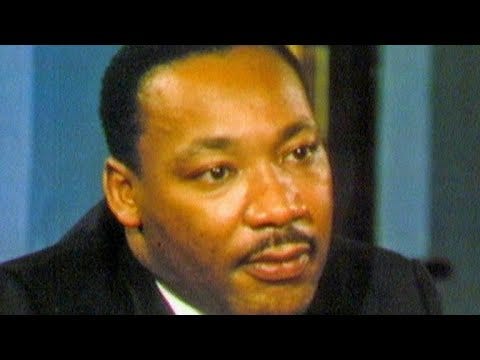
“The strong man is the man who will not hit back, who can stand up for his rights and yet not hit back,” Dr. King told thousands of supporters at Holt Street Baptist Church on Nov. 14, 1956. “If we as Negroes succumb to the temptation of using violence in our struggle, unborn generations will be the recipients of a long and bitter night … a long and desolate night of bitterness. And our only legacy to the future will be an endless reign of meaningless chaos.”
This can also apply to the rhetoric we use against our political and ideological opponents. I’ve struggled myself with Dr. King’s challenge in this regard, as it’s personally easier for me to resist throwing a physical punch than a rhetorical one.
I’m far more tempted to embrace Nietzsche’s asserted “contempt for man,” as humanity currently exists, but Dr. King believed true progress could only come when we rejected contempt and especially hatred for others, even those whose actions we strongly oppose.
Dr. King definitely chafed at the use of politeness as a shield against positive social change, but he didn’t think candor was the same as cruelty.
During a lecture at Brandeis University, Dr. King said, “And so we come to love all men, not because they are likable, not because we like the way they act. And it’s interesting that there’s a passage in the Bible which says love your enemies, and I’m very happy it doesn’t say like your enemies. It’s pretty difficult to like some people. Like is an affectionate sort of thing. You like to be with some people. You like their attitude, you like the way they think, you like the way they act. That’s an affectionate sort of thing, and you like them. But there’s some, there’s some people that it’s pretty difficult to like. I find it rather difficult to like Senator Eastland. I find it difficult. But there is an ethical something which says to me, love Senator Eastman, and love is greater than like”
Democratic Senator James Oliver Eastland from Mississippi was a staunch segregationist and powerful opponent of racial integration. In the 1930s, Eastland took over his family’s cotton plantation, where he “employed” Black sharecroppers, who he treated abominably.
As head of the Senate Judiciary Committee, Eastland — who Joe Biden once complimented in a tone-deaf moment — often intercepted and tanked civil rights bills. He was so terrible that Dr. King declared during the 1966 Meredith March against Fear in Mississippi, “We have to get rid of Jim Eastland if the Civil Rights movement is to go forward,” which of course Eastland effectively leveraged in his successful re-election campaign.
Dr. King paired his activism with avowed patriotism He was honest when he said in 1968 that “America is still a racist country,” but he avoided a “burn it all down” approach. Instead, he demanded that America live up to its ideals, which of course meant that he believed in an idealized America.
“Certainly, this is the glory of America, with all of its faults,” Dr. King said during the Montgomery Bus Boycott. “This is the glory of our democracy. If we were incarcerated behind the iron curtains of a Communistic nation we couldn’t do this. If we were dropped in the dungeon of a totalitarian regime we couldn’t do this. But the great glory of American democracy is the right to protest for right. My friends, don’t let anybody make us feel that we are to be compared in our actions with the Ku Klux Klan or with the White Citizens Council. There will be no crosses burned at any bus stops in Montgomery. There will be no white persons pulled out of their homes and taken out on some distant road and lynched for not cooperating. There will be nobody amid, among us who will stand up and defy the Constitution of this nation.”
People will point out that Dr. King never enjoyed significant public approval during his life. His peak approval was 45 percent in 1965, and after he publicly opposed the Vietnam War, his approval dipped to 33 percent — almost Trump-level. This is often used to justify taking an especially antagonistic approach on an issue. After all, Dr. King preached loved and was still never that popular. The cynics will insist that “radical civility” and a measured approach are the shackles of “respectability politics,” but there’s a reason Dr. King’s most famous speech isn’t titled Go Fuck Yourself. The dream still matters.
His approach was certainly more effective than that of his more radical critics—he also knew how to use economic leverage (the bus boycott wouldn’t have worked if the Montgomery bus system wasn’t so dependent on black riders’ fares) and that appealing to moderate whites was the key to change. On the other side of the battle, openly racist goons like Eastland and Thurmond were far less potent than subtle operators like Richard Russell (who could convince conservatives that opposing civil rights laws could be justified by nonracist principles).
The key is to remember that it may be fun to fire up those who are already in your tent, but the real war is for those who aren’t yet there but could be. King and his allies did this very well and theres much to learn from them.
"𝘏𝘪𝘴𝘵𝘰𝘳𝘺 𝘸𝘪𝘭𝘭 𝘩𝘢𝘷𝘦 𝘵𝘰 𝘳𝘦𝘤𝘰𝘳𝘥 𝘵𝘩𝘢𝘵 𝘵𝘩𝘦 𝘨𝘳𝘦𝘢𝘵𝘦𝘴𝘵 𝘵𝘳𝘢𝘨𝘦𝘥𝘺 𝘰𝘧 𝘵𝘩𝘪𝘴 𝘱𝘦𝘳𝘪𝘰𝘥 𝘰𝘧 𝘴𝘰𝘤𝘪𝘢𝘭 𝘵𝘳𝘢𝘯𝘴𝘪𝘵𝘪𝘰𝘯 𝘸𝘢𝘴 𝘯𝘰𝘵 𝘵𝘩𝘦 𝘴𝘵𝘳𝘪𝘥𝘦𝘯𝘵 𝘤𝘭𝘢𝘮𝘰𝘳 𝘰𝘧 𝘵𝘩𝘦 𝘣𝘢𝘥 𝘱𝘦𝘰𝘱𝘭𝘦, 𝘣𝘶𝘵 𝘵𝘩𝘦 𝘢𝘱𝘱𝘢𝘭𝘭𝘪𝘯𝘨 𝘴𝘪𝘭𝘦𝘯𝘤𝘦 𝘰𝘧 𝘵𝘩𝘦 𝘨𝘰𝘰𝘥 𝘱𝘦𝘰𝘱𝘭𝘦. 𝘖𝘶𝘳 𝘨𝘦𝘯𝘦𝘳𝘢𝘵𝘪𝘰𝘯 𝘸𝘪𝘭𝘭 𝘩𝘢𝘷𝘦 𝘵𝘰 𝘳𝘦𝘱𝘦𝘯𝘵 𝘯𝘰𝘵 𝘰𝘯𝘭𝘺 𝘧𝘰𝘳 𝘵𝘩𝘦 𝘢𝘤𝘵𝘴 𝘢𝘯𝘥 𝘸𝘰𝘳𝘥𝘴 𝘰𝘧 𝘵𝘩𝘦 𝘤𝘩𝘪𝘭𝘥𝘳𝘦𝘯 𝘰𝘧 𝘥𝘢𝘳𝘬𝘯𝘦𝘴𝘴, 𝘣𝘶𝘵 𝘢𝘭𝘴𝘰 𝘧𝘰𝘳 𝘵𝘩𝘦 𝘧𝘦𝘢𝘳𝘴 𝘢𝘯𝘥 𝘢𝘱𝘢𝘵𝘩𝘺 𝘰𝘧 𝘵𝘩𝘦 𝘤𝘩𝘪𝘭𝘥𝘳𝘦𝘯 𝘰𝘧 𝘭𝘪𝘨𝘩𝘵."
~ Rev. Dr. Martin Luther King, Jr.; “Stride Toward Freedom: The Montgomery Story”; 1958.
https://www.youtube.com/watch?v=wnnGHx_WNCw