


The midterm elections are two months from now, and while Democrats are bullish about winning statewide in Texas and even Alaska, Oregon liberals are concerned about the state’s gubernatorial race … yes, the one in Oregon.
Polls show a tight race in the rematch between incumbent Tina Kotek and Republican state Sen. Christine Drazan. A recent Drazan internal poll has her up over Kotek 48 to 44 percent, but campaign internal polls are like that mirror at the bar that makes you look sexy when you’re actually very drunk. However, Kotek’s approval rating has polled as low as 38 percent during her first term, and just 41 percent of Oregonians believe the state is headed in the right direction. Worse, Kotek’s support has cratered in the Portland metro area. According to a May survey, only a third of Portland metro area respondents said they had a positive opinion of the governor, and this was prior to the Democratic primary where Kotek didn’t even face a serious challenger.
Those Portland numbers are obviously concerning, because that’s where she has to run up the margins to win. It doesn’t take a long drive outside of Portland before you start seeing Drazan signs.

Fortunately for Kotek, her lousy numbers in Portland doesn’t mean we’re going to consider voting for Christine Drazan or any Republican. In fact, it’s likely that her numbers here are low because she’s disappointed the left, which every Democratic governor tends to do. The far left is often the political version of Prince’s mother.
Kotek’s progressive critics argue that the governor has shifted too far to the center on business-friendly initiatives, drug policy, and public safety. Her Republican critics believe she hasn’t done enough and still blame her for most of the states’s problems.
Halfway through her term, Kotek tried positioning herself as a pragmatic progressive or what Josh Shapiro and Elissa Slotkin might call a “get shit done” Democrat. She had a lengthy discussion with business leaders in December 2024 about her plan to make downtown Portland more than just a drive-through-very-quickly destination.
“I think this is about: Can you make stuff work?” Kotek told reporters. ”I am very progressive when it comes to public policy, but I am pragmatic and I’m tired of things not working.”
However, it might take some time for things to start working, perhaps even forever. Political consultant and Kotek ally Doug Moore, who was once director of the Oregon League of Conservation Voters, said, “I know everyone wants to wave a magic wand and say. ‘You’ve got to fix everything right now.’ That’s not how public policy works.”

Sensing a possible opening, Drazan campaigned in downtown Portland last week, promising better days ahead with her at the helm.
“I won’t stand here and promise you that (all Oregon’s problems) will go away immediately, but I will stand here and promise you this: We will stop accepting failure,” Drazan said. “Failure is no longer an option.”
Unfortunately, failure has seemed like more than just an option but actual policy. Homelessness has risen by double digits since 2023. The public school system is struggling. Oregon public schools are ranked near the bottom of the nation, and not surprisingly, student enrollment is plummeting. The Portland Public School District is facing $65 million in budget cuts, with significant staff layoffs, and as many as 20 schools could close due to declining enrollment. The only things we can really blame on Donald Trump directly are the increasing grocery and gasoline prices.
As governor, Drazan says she has plans to address all these issues. “We cannot keep doing what we have been doing and expect a different result,” she states on her campaign site. “Nothing will change unless we do.”
Most of her plans involve typical 1990s-era blue state Republican solutions: She’ll end regulations that she believes are driving up the costs of housing, energy, food, transportation, childcare, healthcare, and business. She’ll prioritize affordability and “work to ensure that homelessness is rare and temporary, not chronic and permanent.” Any present-day MAGA policy is absent or buried underneath more appealing euphemisms. So, yeah, I’m concerned.
Drazan has made her own pitch to the center. In her campaign ad, she says, “Our problems are not partisan problems. They’re leadership problems.” However, Drazan is not an actual political moderate. Long ago, northwest Republicans were at least crunchy enough to appreciate nature, but Drazan has a 20 percent score Oregon League of Conservation Voters. She has an “A” rating from the NRA Political Victory Fund, and Oregon Right to Life endorsed her in 2022. She isn’t really trying the Susan Collins faux-moderate spin, though she laughably gets credit in the media for agreeing with the reality that Donald Trump lost the 2020 presidential election.
So far, though, Drazan has benefitted from keeping a low profile. JD Vance isn’t campaigning in Klamath Falls. Kotek defeated Drazan by just three points in 2022, which is not a “solid blue state, don’t worry about it” margin. Former Democrat Betsy Johnson had about nine percent of the vote as an independent, and it was believed she was more of a spoiler for Kotek than Drazan. However, Johnson held more center-right views on guns, homelessness, and climate than Kotek. Had she not run, many of her supporters might have swung to Drazan, and she’s not on the ballot this year.
Oregon is actually not overwhelmingly Democratic or liberal. According to 2020 exit polls, self-identified independents and moderates are the largest groups.
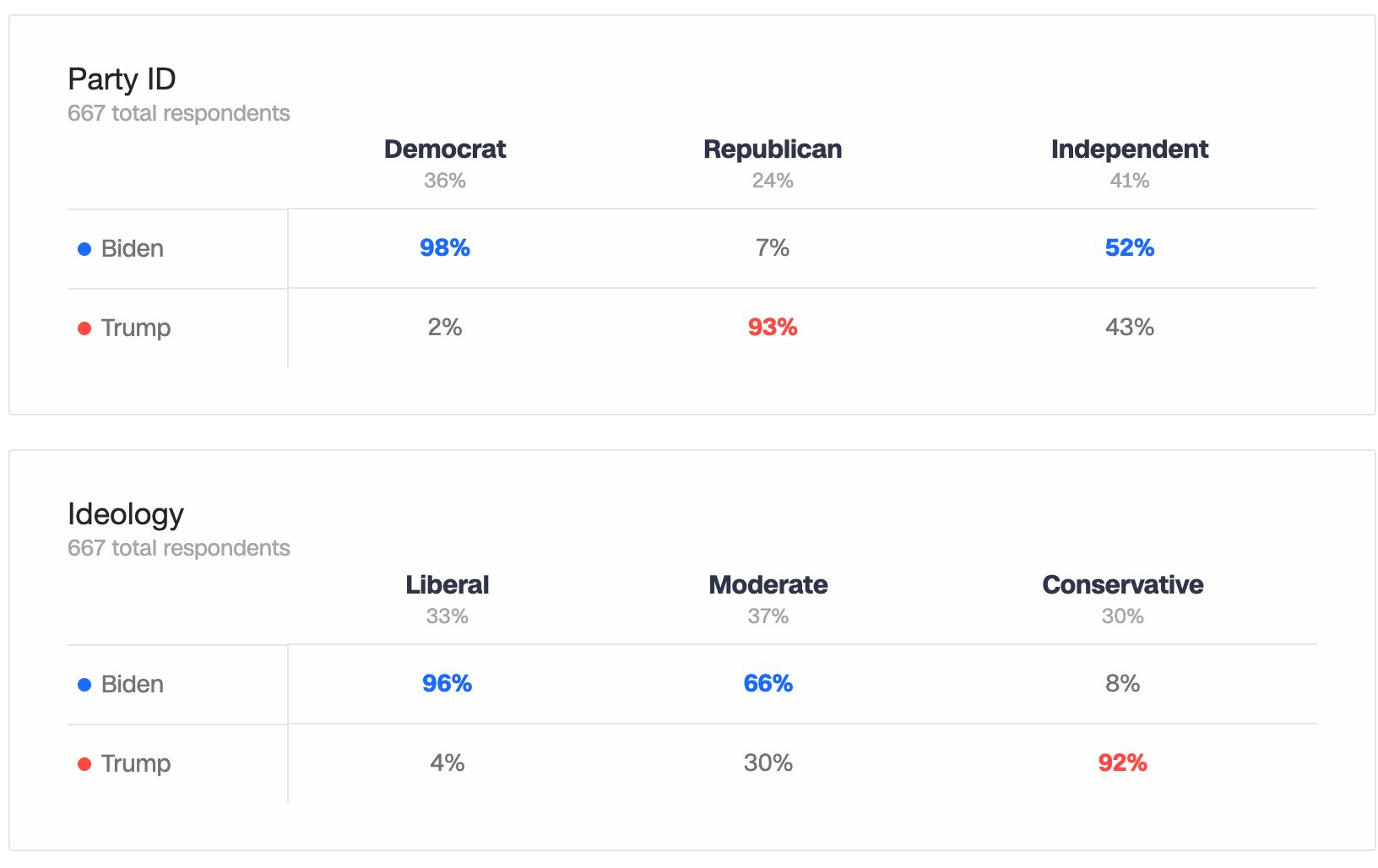
Of course, independents and moderates might roll their eyes at whatever Democrats are doing in Oregon, but that doesn’t mean they are ready to break toward a Republican, especially when Trump invades and persecutes states he doesn’t like. The governor is on the front lines of that not-so-cold war.
Democratic governors have a demonstrated habit of polling in the basement during their terms but still winning re-election. Yet, they almost always underperform the presidential and Senate Democratic candidates. There were Hillary Clinton voters who didn’t vote for Kate Brown, and more than 100,000 people voted for Ron Wyden but not Tina Kotek. Of course, every Democratic seat in the Senate matters, but fed-up center-left voters might feel like a Republican governor is not an existential threat, especially with Democrats holding a supermajority in the statehouse. How much damage could a Republican governor do? (A lot.)
That’s why, unless Democrats make some major changes in the state, a Republican is eventually going to get lucky, and as usual, I hope it’s not this year.
I have to say, if you are a Democratic governor in a bright blue state who is fending off MAGA-adjacent challengers in 2026, it seems likely you haven't done a great job.
Being an Oregonian liberal, I have been watching this race with a bit of trepidation. Drazen keeps saying she can “fix it”, but I want to know how she intends to do so. Ship the Portland homeless out of state somehow? Build more homes without increasing infrastructure ($$)? Keep the schools open with less students? Maybe consider decreasing the minimum wage back to Republican levels! Show your work, Christine. Talk is cheap.