


The House of Representatives just passed a bill that would make daylight saving time permanent. It would just become “time.” This would spare Americans the trauma of self-induced jet lag twice of year. Donald Trump supports this legislation, which is usually reason enough to consider it a terrible idea.
Studies have shown that screwing with our natural biological clocks is not ideal. Dr. Trang VoPham, an assistant professor of epidemiology at Fred Hutch, warned in a recent interview, “The increase in light in the evening leads to later bedtimes, more sleep disruption, ultimately less sleep, as well as a misalignment between our circadian system, or in other words, our internal biological clock, and our daily schedules.”
So, no matter what law we pass, our bodies are still conditioned for standard time.
It’s especially an issue for regions where the sun naturally sets later in the day, like Seattle or Portland, Oregon. It’s darker longer in the mornings, when people are leaving for work or taking their kids to school. This also puts the lie to the “DST saves electricity” argument, as you arguably turn on even more lights in the morning when getting ready for the day than when you’re winding down at night.
Businesses have long appreciated the extra hour of daylight shopping in the late afternoon/early evening, which might explain Trump’s supporter for permanent daylight saving time. Sporting events and other outdoor functions can start later, which boosts attendance. The Uniform Time Act of 1966 adopted what seemed like a reasonable compromise: Daylight saving time started at 2 a.m. on the last Sunday in April and ended on the last Sunday in October. (Waiting until late April to “spring forward” means sunrise is no later than 6 a.m. in Portland.)
If you must have daylight saving time, summer makes the most sense. Sunrise right now in Portland is about 5:45 am, so it’s light out when most people wake up. Trading the 4:45 am standard time sunrise for an extra hour in the evening is a fair bargain.
Permanent Daylight Saving Time makes far less sense because the 7:50 am sunrise in January becomes 6:50. Years ago, I’d often take the 8 a.m. bus from Portland to Seattle, and this is what it looked like when I left the house in January. Now, imagine this is an hour later each day.
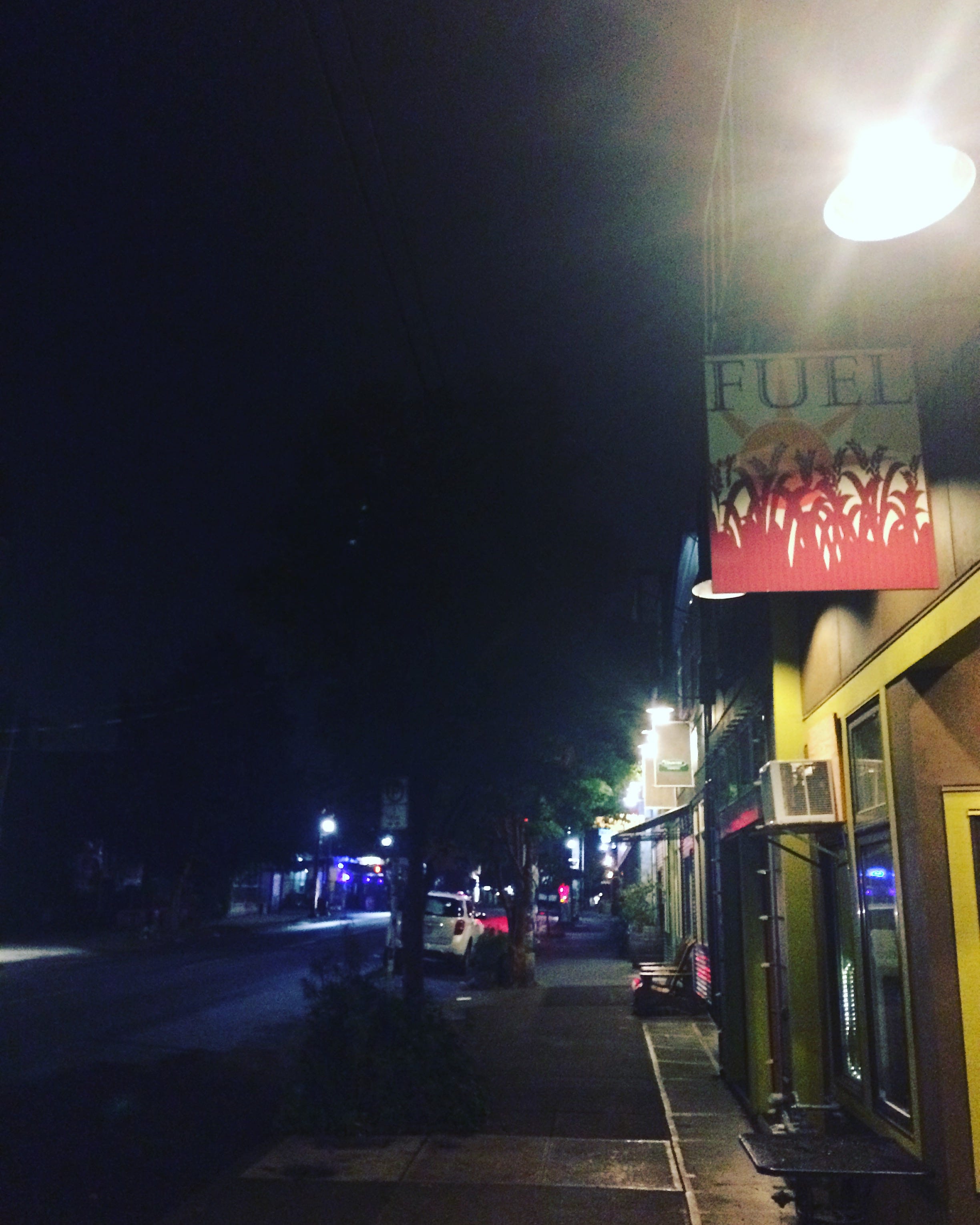
Sure, the 4:30 p.m. sunset is now 5:30, which is not much of a trade. In the pacific northwest, that’s the end of peak commuting. It’s also cold, damp, and dark regardless of when the sun — which is theoretically present — actually sets. You’re not enjoying a drink on the patio. You’re curled up by the fire.
Permanent daylight saving time isn’t a new concept. During an energy crisis in 1973, President Richard Nixon signed into a law a bill that briefly made daylight saving time year round. The logic reportedly was that “setting clocks ahead one hour could reduce nighttime electrical use and shave about 2 percent off the nation’s demand for energy.”
This clearly wasn’t thought out well. Not long after the law took effect in 1974, eight children in Florida were involved in predawn car accidents while walking to school. Parents — well, mostly mothers as it was the 1970s — driving their kids to school because it was no longer safe for them to walk didn’t actually help save energy.
What a clever TV commentator termed “Daylight Disaster Time” didn’t last a year before Congress restored standard time in fall 1974, a few months after Nixon resigned.
Very clever people online insist that this time will be different because obviously, it’s so much has changed since 1973. Yes, M*A*S*H no longer airs in primetime, but otherwise kids still go to school in the morning. It’s been suggested that we just shift school start times, because it’s apparently just that easy. This seems like an awful lot of work for daylight happy hours in the winter.
One thing I agree that has changed significantly since 1973 is that Americans are even less likely to accept when they’ve made a big mistake. If permanent daylight saving time does become the law, we’re likely stuck with it no matter how bad things turn out.
The 90 degree heat in Portland this week has me longing for fall, but my special summer subscription sale is still in effect — 40 percent off the usual annual paid subscriber rate. That’s just $30 a year. Thanks to all who have upgraded to paid subscriber status recently.
This week, I wrote about how gun control advocate Fred Guttenberg went full Stephen Miller on Rep. Rashida Tlaib.

Then there was part two of my Angels in America discussion with Evan Stern.

Mainstream Democrats have always questioned the electability of their opponents, and they’ve often been wrong.

My friend Noah Berlatsky joined me to discuss Graham Platner and Dr. Abdul El-Sayed, and how the two are nothing alike, despite what some cynical folks might suggest.
That’s it for this week. See you on Monday.
Like everything this regime does it’s another stupid idea. Springing forward is painful for me losing that one hour. Fall back is much kinder to me.
I lived in Arizona for several years which doesn't observe DST. It was nice not having to change clocks or body rhythms, and my car and microwave clocks were always "correct", but weird trying to remember if we were in the Mountain time or the Pacific time half of the year. Also Navajo DOES observe DST and Hopi doesn't which can make crossing the highway in Tuba City a weird mini-time warp spring through fall.