


The Michigan Democratic Senate primary is finally over, and while it wasn’t exactly a long national nightmare, it was a tedious period where smears and innuendo replaced a rigorous debate over ideas.
Abdul El-Sayed defeated Rep. Haley Stevens. The race was close, as El-Sayed struggled in rural areas and Detroit, where Stevens dominated. The party’s left wing needs to confront the fact that their “working class” revolution doesn’t resonate with a significant number of actual working-class people. I think a class-based economic message can’t ignore that education has a significant impact on class identity. However, while Barack Obama was probably more moderate than Fox News would ever admit, Jesse Jackson was a true economic populist and his message resonated with working class Black Americans in the 1980s.
Bad-faith critics have described El-Sayed as a “radical,” but his ideas are hardly “anti-American,” as moderate Democrats like Hillary Scholten has suggested: For instance, he promotes Medicare for All, opposes data centers, and repudiates the disproportionate influence of money in our politics. The last one was perhaps personal, as AIPAC dumped $60 million in the primary race to help elect his opponent Rep. Haley Stevens. That amount of cash is a reasonable starting place if Marvel wants to get Tom Holland back for another Spider-Man film, but with Stevens, it always felt like they were setting their money on fire, like the Joker in that scene from The Dark Knight: “It’s not about money. It’s about sending a message.” In this case, the message was that AIPAC would not abide even a single member of Congress who’s not rigidly pro-Israel — and not simply “Israel is a respected U.S. ally with a right to defend itself.” No, nothing less than unwavering, uncritical support will do.
Someone online recently posted the hypothetical: “If a Klan member were running for Senate, would you criticize the NAACP for spending a fortune to stop him?” This is in no way a sensible argument. First place, El-Sayed is not David Duke, and it’s wrong to equate Israel’s right-wing government with all Jewish people, especially Jewish Americans. Also, yes, I would criticize the NAACP for squandering perfectly good Tom Holland in Spider-Man 5 money to stop a hypothetical Klan member. This is still a democracy, after all, and if you can’t build up actual grassroots support to defeat the guy in a hood, something’s clearly wrong with your chosen candidate.
My core issue with Haley Stevens’ campaign is that, to borrow from The West Wing’s Josh Lyman, I had no idea what she was for. I had no idea what she’s against, other than that she was “for winning and against someone else winning.” (Watch below.)
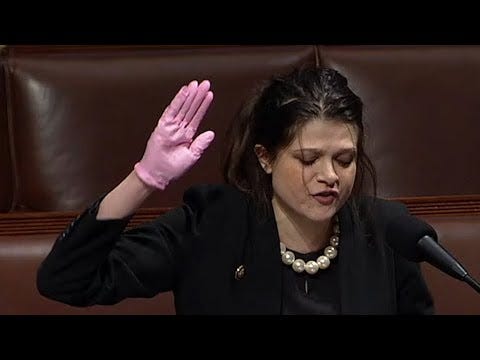
Stevens and her mainstream Democratic supporters consistently pushed her “electability” over El-Sayed. She never adequately explained why she was more electable, aside from less-than-subtle winks about El-Sayed’s supposed non-Michigan-ness (he’s a Michigan native). She didn’t hit him on actual positions he held that were electoral losers, mostly because she was the one on the wrong side of many of them. Stevens did share op-eds from George Will of all people about how El-Sayed can’t win a general election. She also desperately pointed at hypothetical general election head-to-head polls where she led Rogers and El-Sayed was behind (all within the margin of error).
El-Sayed’s weakness with rural voters could prove an issue in an election that’s won on the margins. I am less concerned, though, about Black voters not turning out for him in the general. Black voters are perhaps the most loyal Democratic partisans. We saw this in the New York mayoral race when Black voters who’d backed Andrew Cuomo in the primary switched to Zohran Mamdani in the general.
However, there’s a widespread presumption among center-left Democrats that because Stevens won a right-leaning House district, she could also easily turn out the margins necessary in more liberal districts to win statewide. We haven’t actually seen Stevens try to achieve this, and her numbers with young people in particular are awful. (Note that most general election polling makes assumptions about turnout among key demographics.)
Of course, “electability” argument in a party primary, no matter how many general election polls a candidate hypes, have never worked and are often flat-out wrong. It just screams desperation.
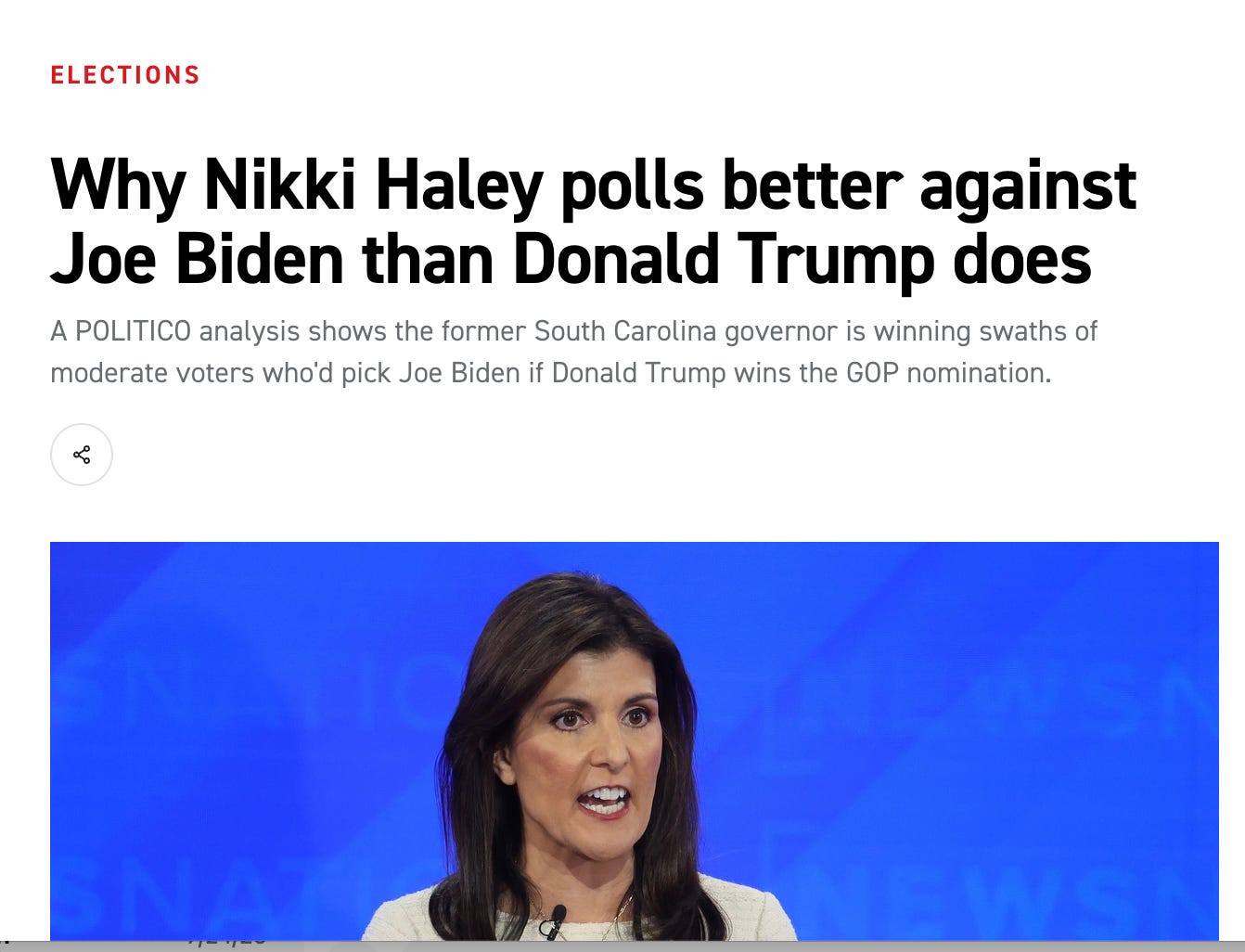
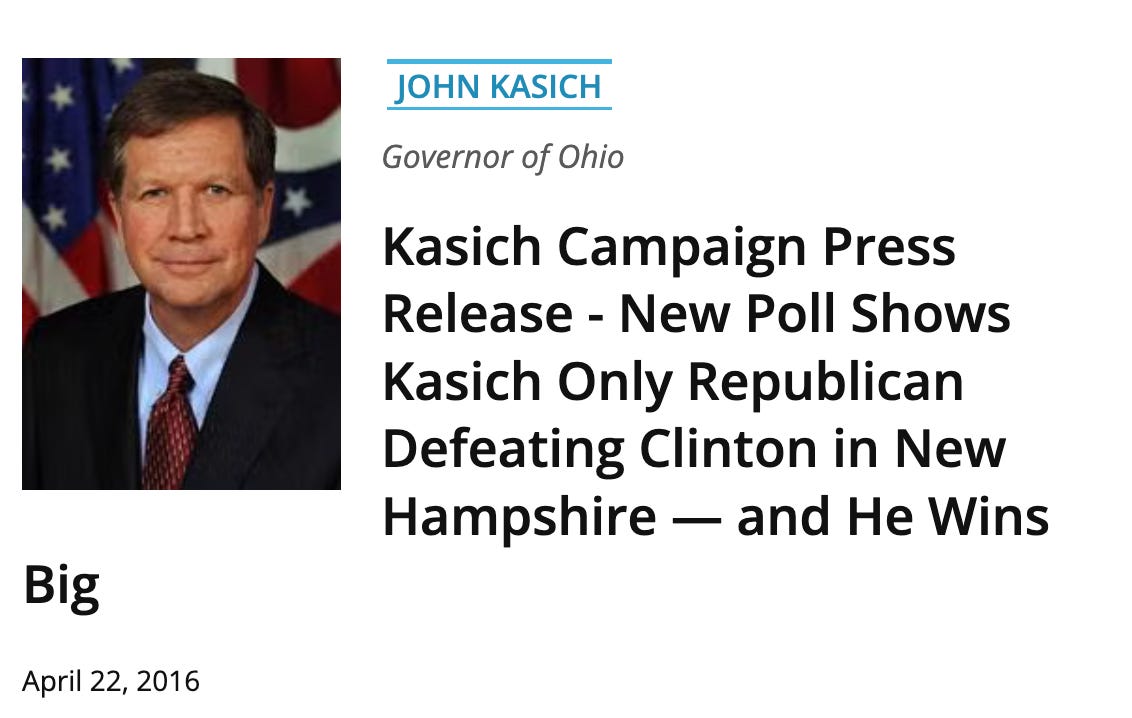
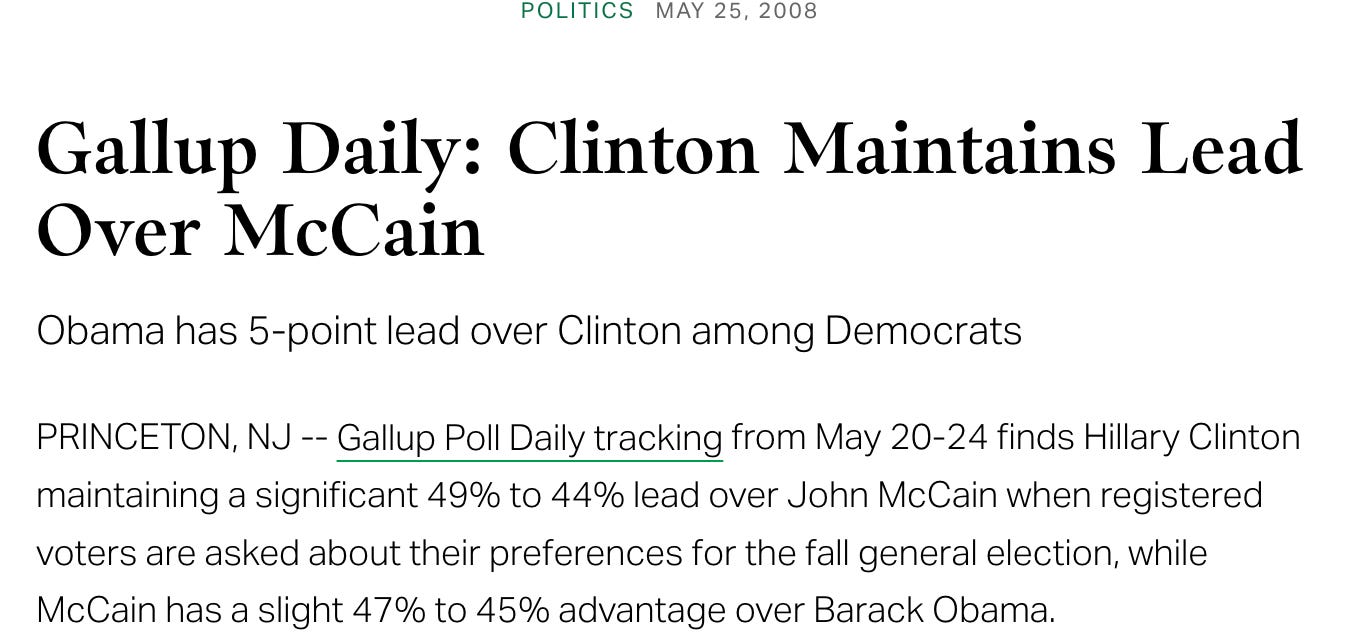
“Electability” only works if voters actually want to elect that candidate. You can’t guilt or shame them into voting for someone who they think doesn’t best advance their interests. Stevens also campaigned as if it were 2018, when primary voters were more open to her credentials. (She kept mentioning her “work” with Barack Obama on the auto rescue, but that was 17 years ago and — this is key — all before Donald Trump.) Now, voters have had it with a party that — despite flipping the House in 2018, winning the presidency in 2020, and gaining control of the Senate in 2021 — somehow lost everything “slowly then suddenly,” like a tragic character from a Hemingway novel. Oh, and Donald Trump is president again.
The Democratic establishment sometimes acts as if Joe Biden was never elected in 2020. Biden promised a return to normalcy that wouldn’t require “big systemic change,” as Elizabeth Warren demanded. Democratic primary voters are now more likely to agree with Warren, who told Stephen Colbert in 2019: “A country that elects someone like Donald Trump is a country that’s already in serious trouble.”
Considering that the race was relatively close, you might wonder what would’ve happened if mainstream Democrats had backed state senator Mallory McMorrow, who presented herself as an “outsider” and declared that the “same old crap out of Washington” won’t solve our problems.
“We need new leaders,” McMorrow said. “Because the same people in D.C. who got us into this mess are not going to be the ones to get us out of it.”
Of course, McMorrow’s “change” message was a deal breaker for an establishment desperate to remain in power despite a worse record than the ‘62 Mets.
McMorrow would have voted for a change in Senate leadership, so Chuck Schumer conveniently saw her as less “electable” than Stevens. Democratic Senatorial Campaign Committee Chair Sen. Kirsten Gillibrand — who probably should no longer have this job — reportedly steered donors away from McMorrow. She claimed “ominously” that McMorrow was a member of the Democratic Socialists of America, which she is not. (Gillibrand must travel with a fire extinquisher considering how often her pants must catch on fire.)
Compare this underhanded shadiness with how Nancy Pelosi freed House candidates to openly run against her as speaker in 2018. After 2024’s catastrophic loss, Democratic primary voters clearly want candidates who’ll push for change, particularly in a fossilized leadership. McMorrow isn’t DSA, no matter what you might’ve heard from Gillibrand, but she would have advocated for real change.
Meanwhile, Stevens represented the status quo that primary voters are clearly rejecting. I have no personal grudge against Stevens. I just think she ran perhaps the most cynical and shiftless campaign in recent memory. Even center-left Democratic Party strategists conceded that there was little organic enthusiasm for her campaign. It was simply assumed that enough PAC money would get her over the finish line and then Stevens could stage a revival of the 2018 “Trump is terrible” platform. Voters would then turn out for the safe Democrat to keep Trump in check. That formula is no longer compelling to voters, who’ve been awake since 2016.
Glad that Al-Sayed won. Stevens couldn’t even answer man on the street questions like when she was greeting a woman holding her baby and was trying to get her vote. When the woman started asking intelligent questions about her policies and he acceptance of AIPAC money she completely avoided answering the question. That was not a candidate prepared for working in the big house for sure.
And I’m loving AIPAC spending big $$ to lose.
I haven't followed all the gyrations of this race, but it tracks pretty closely with other results all primary season long. Joe Biden's attempt to pivot to "normalcy" probably doomed him more than inflation did. Democrats are sick of the mealy-mouthed Stevenses of the world, who think we just need some tweaking around the edges and all will be well again. Who are more afraid of offending people who will likely never vote for them than actually fighting for something. It's not a policy debate on the Democratic side now, it's who best communicates the urgency of the moment and is not afraid of an all out brawl for power (I don't think it hurts that El Sayed looks like a tight end either, lol.)