


Democrats have taken it on the chin lately in the ongoing redistricting wars. Last week, the Virginia Supreme Court overturned the recent election results that would’ve let Democrats draw a more favorable map. Meanwhile, Republican-run states are giddily redrawing new maps that eliminate Democratic representation, and the U.S. Supreme Court’s gutting of the Voting Rights Act has freed them to target the once-safe majority-minority districts.
It’s not all bleak, though. Many centrist pundits have perhaps glibly suggested that Democrats can respond to Republican gerrymandering by simply persuading more people to vote for them. Astounding how these pundits possess all that wisdom, yet they live amongst the common people.
Yes, it’s true that the more aggressive gerrymanders might paradoxically offer some pickup opportunities for Democrats in a wave election. However, there’s no bullish case now for Democrats that doesn’t depend on the party overall performing better with white voters, specifically those who don’t host an MSNBC series.
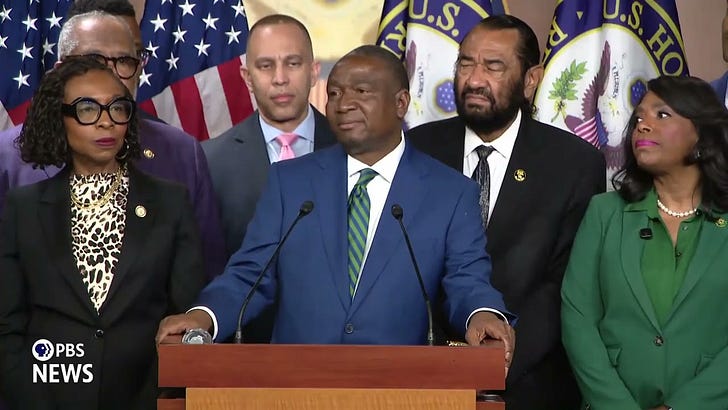
Over the past 25 years Democrats have steadily lost ground with non-college-educated white voters. Indeed, a common mantra from many liberal pundits is “Democrats haven’t won white voters since 1964.” It effectively justifies a problem by merely identifying it.
Even now, mainstream liberals will freak out if you suggest that the party must start doing better with white voters, particularly young white people without college degrees. A college-educated, minority-centric coalition was never sustainable — not with the structural disadvantages for that coalition in the Electoral College and the Senate, and as the GOP’s aggressive Supreme Court-approved gerrymandering demonstrates, a political coalition of the marginalized is easily targeted.
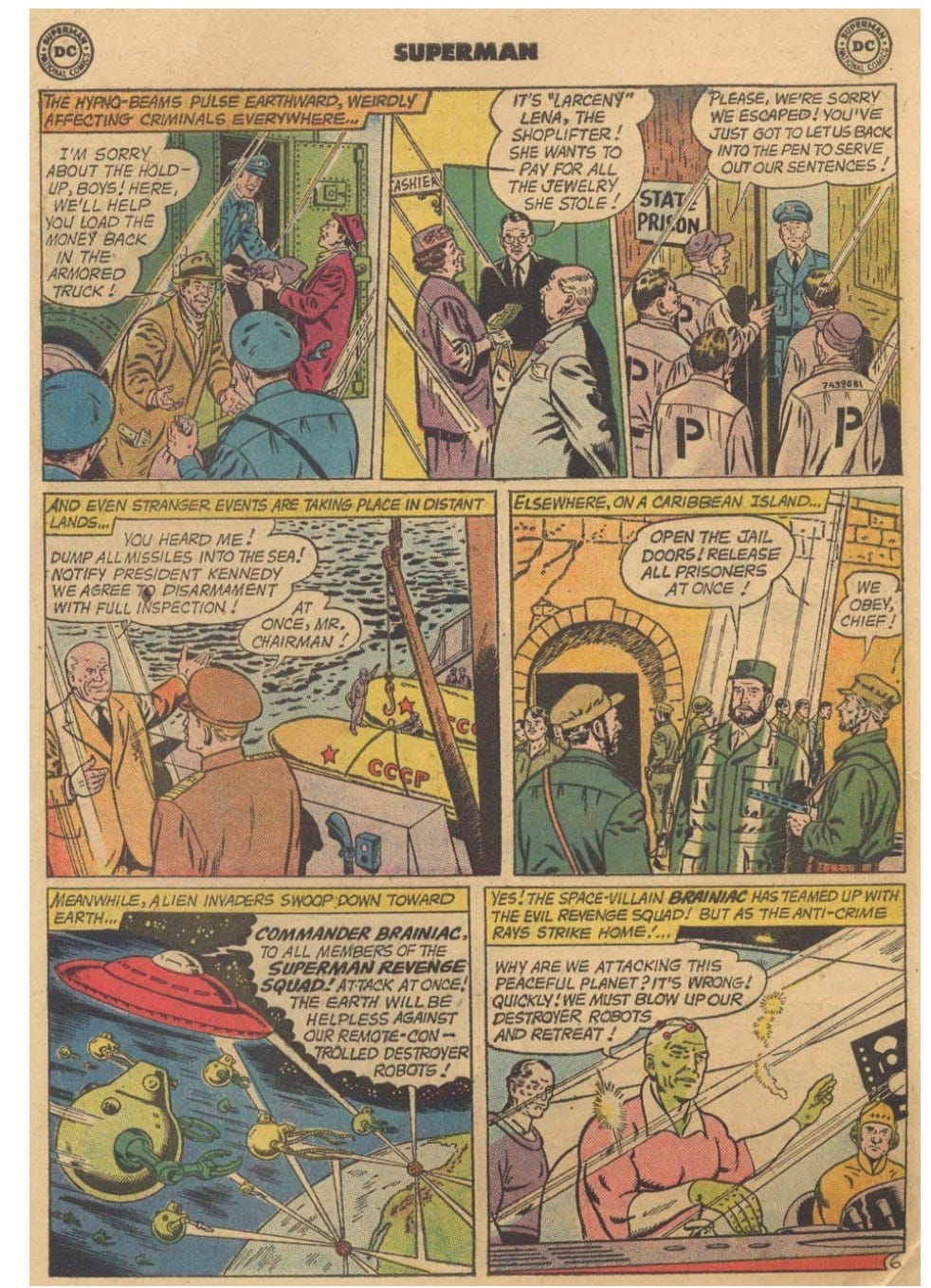
It’s perhaps morally satisfy to offer academic treatises about how Reconstruction never succeeded and white voters are irredeemably racist bigots, but since we can’t stop white people from voting nor have perfected the anti-evil brainwashing ray Superman designed in a 1960s imaginary story, this observation is the rhetorical equivalent of waving a white flag.
What the “Democrats haven’t won white voters since 1964” mantra overlooks is that there’s a considerable difference between losing white voters narrowly and losing in lopsided routs. Bill Clinton lost the white vote by just a couple percentage points in 1992 and 1996. He won white women outright in 1996, which no Democrat has done since. Clinton performed better with voters without a college degree than he did with college-educated voters. This was consistent with a more working-class Democratic Party.
Although Democrats were in the presidential wilderness between 1981 through 1992, they still maintained a sizable majority in the House of Representatives. Democrats lost just 16 seats in 1984 (down from 269 to 253) when Ronald Reagan carried 49 states. In 1984, there were 189 districts that voted for both Reagan and a congressional Democrat.
Democrats gained control of the Senate in 1986, even adding another seat in 1988 when Mike Dukakis lost handily. The 52 Democrats who helped block Reagan’s far-right Supreme Court nominee Robert Bork in 1987 included senators from Montana, Texas, Mississippi, Tennessee, and Alabama. Democrats held the Senate through 1994 when the current realignment began. (Republican Fred Thompson, who later played the D.A. on Law & Order won the special election to replace Gore in the Senate)
At the state level, this performance was only possible because Democrats were competitive with non-college white voters. His current vegan diet might confuse you, but Clinton was once the governor of Arkansas.
There were admittedly more conservative Democrats back then and ticket-splitting was more common. Now, congressional races are effectively nationalized. This doesn’t help Democrats.

Very clever pundits have what they consider very clever ideas for fixing this situation. Last year, New York Times columnist Ezra Klein advised Democrats to run anti-choice candidates in Kansas, Ohio, and Missouri, but these are three states that recently held separate abortion referendums and abortion rights prevailed each time. (That seems like something you’d fact check.)
Conservative David French, another New York Times columnist, posted on social media, “Ezra’s completely right. The Democratic Party never should have closed its doors to pro-life voices, and it will never win if it doesn’t run candidates who actually have a chance to compete in red states.” Democrat Neera Tanden agreed, “In 2009, the US Senate had 60 Democratic votes but a lot of them were not 100% pro-choice. Ask yourself if you would feel better with that Senate than this one.”
Unfortunately, the issue is not as simple as taking strategic positions on issues Democrats (or at least their focus groups) believe will help them in “red” states. They need to build a better overall rapport with voters in these areas. Currently, the Democratic brand is alienating to them, and it’s not just working-class white men.
Sarah Longwell at the Bulwark revealed an interesting factoid from a focus group she conducted with male Trump 2024 voters who currently disapprove with how he’s destroying the world.
“We asked them to raise hands for who they might support in a presidential run,” Longwell wrote. “Whole group interested in Rubio. 1.5 hands for Vance. 4 for Fetterman.”
Although Fetterman is a crappy senator, that doesn’t mean he’s an ideal Republican. He wrote in an op-ed for the Washington Post — not even his hometown paper! — that “I remain strongly pro-choice, pro-weed, pro-LGBT, pro-SNAP, pro-labor and even pro-rib-eye over bio slop.” His most right-wing position is his unwavering support for Israel, but he shares that with Chuck Schumer, who Trump voters hate like everyone else. He punches left a lot but obviously so do Rubio and Vance, whose political aspirations recall the chorus from Hamilton’s “The Reynolds Pamphlet.” (Watch below.)
No, Fetterman’s appeal among male Trump voters is all a “vibe.” It’s probably the same for Graham Platner, who also doesn’t dress like a corporate consultant (although Platner has said that he’d wear a suit on the Senate floor so he could actually do his job).
Of course, liberals hate “vibe-based” voting. It offends their sensibilities. They insist that what should persuade voters are detailed plans, rousing Senate floor speeches, and whiteboards. Alas, Democrats can too often sink under the quick sand of “what should” be rather than what is. I think there is resistance toward reviving a Bill Clinton coalition because that is seen as the politics of “what was” rather than Barack Obama’s victory in a racially diverse politics that “should be.”
“Vibes” can also reflect a level of trust voters have in a politician: Does the candidate genuinely feel like “one of us” or are they simply trying to “handle” us?
Neither Fetterman nor Platner come from actual working-class backgrounds, like Bill Clinton or even Barack Obama, and their reverse Gatsby routine seems to land better with voters who aren’t themselves working-class.
Fetterman is a lazy slob, but I’d still take several dozen Fettermans in “red” districts throughout the country, especially if they maintained Fetterman’s current voting record. Platner has no established record beyond vibes for anyone to trust, but I suppose we can trust that he’s not Susan Collins. It seems as if we’re still a long way off from finding another Bill Clinton, but we probably shouldn’t abandon the search.
Well your problem here is that America's Pilonidal Cyst unlocked the permission structure to fully embrace sadopopulism. Before him many Republicans were content to just rely on Lee Atwater-style innuendo, help craft that "reasonable adults in the room, wink wink" style that works for the professionally credulous until they got Faux News (and the rest of the rightwing media human centipede) up.
But now that APC is the one Presidential candidate that was unafraid to use the tactical nuclear weapon of politics, other Republicans see that as the keys to the kingdom. Protected by Murc's Law, they are free to be *openly,* *flagrantly* bigoted and crank the eliminationist rhetoric up to 11. They're openly seeking to destroy trans people—sadopopulism requires the destruction of minorities. And since their appeal for ethnic cleansing was successful in 2024, it's just open season.
Polls are a lie—they are what people SAY. What matters is what Americans DO. And when Americans give this permission structure for the unreconstructed to wild out, it's no surprise we're in this situation.
What we do know is always, to protect the cottage industry of people prescribing the One Magic Trick of Democratic Messaging, a lot of people have to ignore the whole specter of sadopopulism. Because it just has to be Democrats' fault that people embraced bigoted fanfiction that aligned with their priors. Everything hinges on Democrats' ability to counter the message that {minority} should not exist in America. And I maintain that if you are on that playing field we're in a BAD place.
Definitely doesn't help that in order to do the things that Democratic voters want, you need statute, which requires more than two years of Congressional control in a post-Gingrich Congress.
It's not impossible but it's a hell of an ask.
They insist that what should persuade voters are detailed plans, rousing Senate floor speeches, and whiteboards
I feel seen.