


Spider-Man: Brand New Day is set to break records when it opens in a couple weeks. Since his first big screen blockbuster in 2002, Spider-Man has proven more of a reliable box office draw than even Superman and Batman. He doesn’t have a Quest For Peace or Batman and Robin in his filmography, though some fans have mocked the infamous dance scene from Spider-Man 3. I think it’s glorious.
Spider-Man debuted in Amazing Fantasy No. 15 in 1962, and for more than 60 years we’ve come to think of the character as a youthful wisecracker with relatable problems. Yet, in theory, he would seem to have a lot in common with “creature of the night” Batman, especially during his early pulpy days. Just look at the covers for their respective debuts.
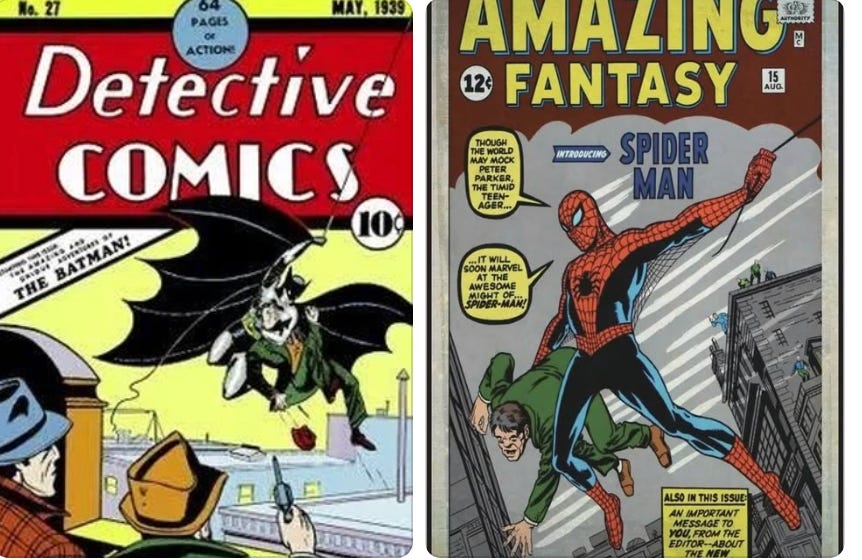
Bruce Wayne dresses like a giant bat to scare criminals, but if you think about it, the average person would probably rank spiders are more personally fearsome. Everyone encounters spiders in their daily life, but very few people have regular access to belfries. Spiders are creepy, despite the concerted PR efforts to justify their existence, and the early stories by Stan Lee and Steve Ditko present a Peter Parker who’s actually more brooding and dark than Batman was at the time. Sure, the Frank Miller-inspired Bruce Wayne is emotionally damaged — a mere mask for his true persona as Batman — but in the 1960s, years before Adam West, he was genuinely upbeat and cheerful. Peter Parker, however, had the origin of a future school shooter.
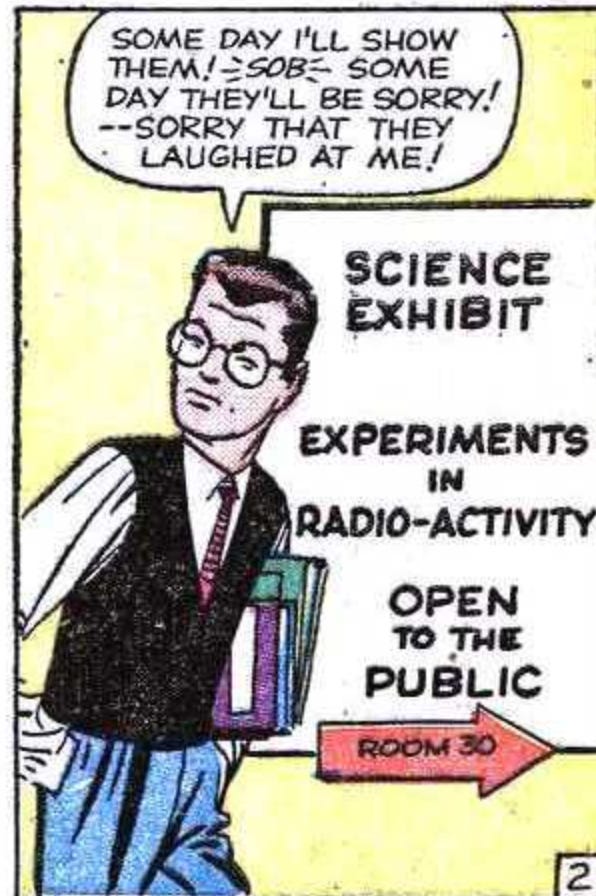
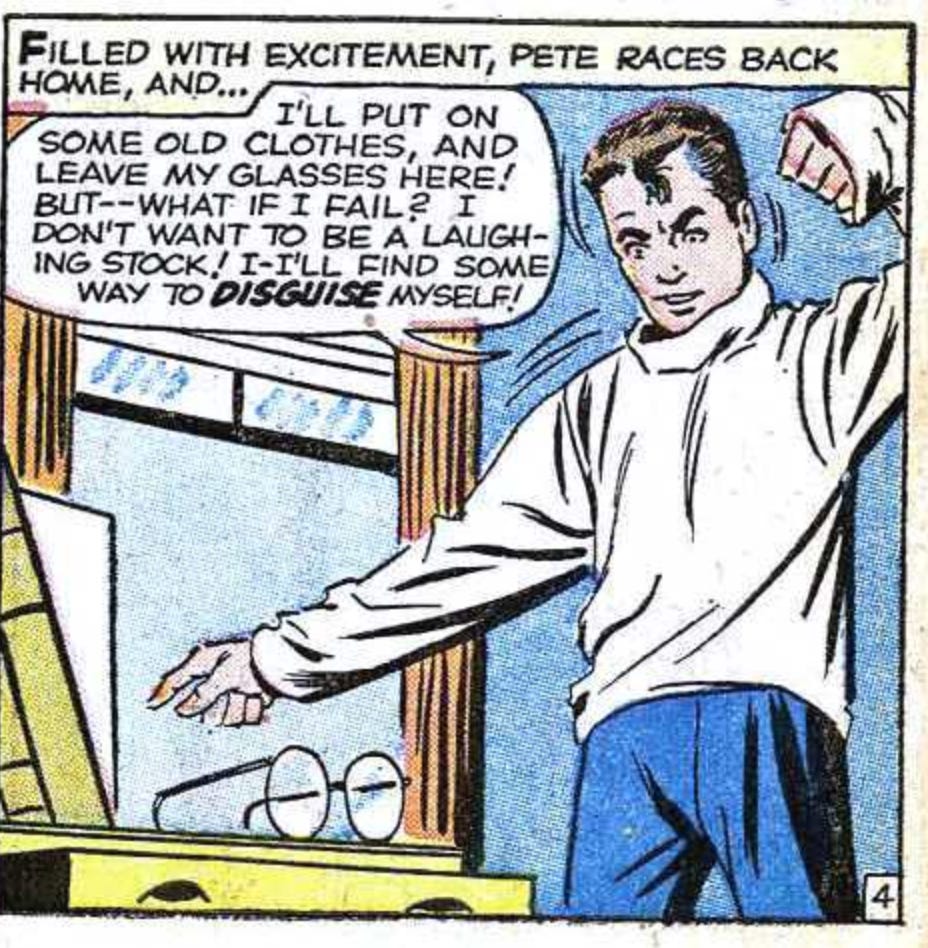
When Peter’s bitten by a radioactive spider during one of those common 1960s open-air radiation exhibits, he gains super powers that he decides to use for personal gain. He disguises himself with a mask — not to protect his loved ones, as is the typical superhero trope — but to avoid potential embarrassment.
Peter makes money performing as Spider-Man. He infamously lets a burglar walk right past when he could’ve stopped him easily. “Sorry pal, that’s your job,” Peter tells a police officer. “I’m thru being pushed around — by anyone! From now on, I just look out for number one. That means me!” He’s officially a young Republican.
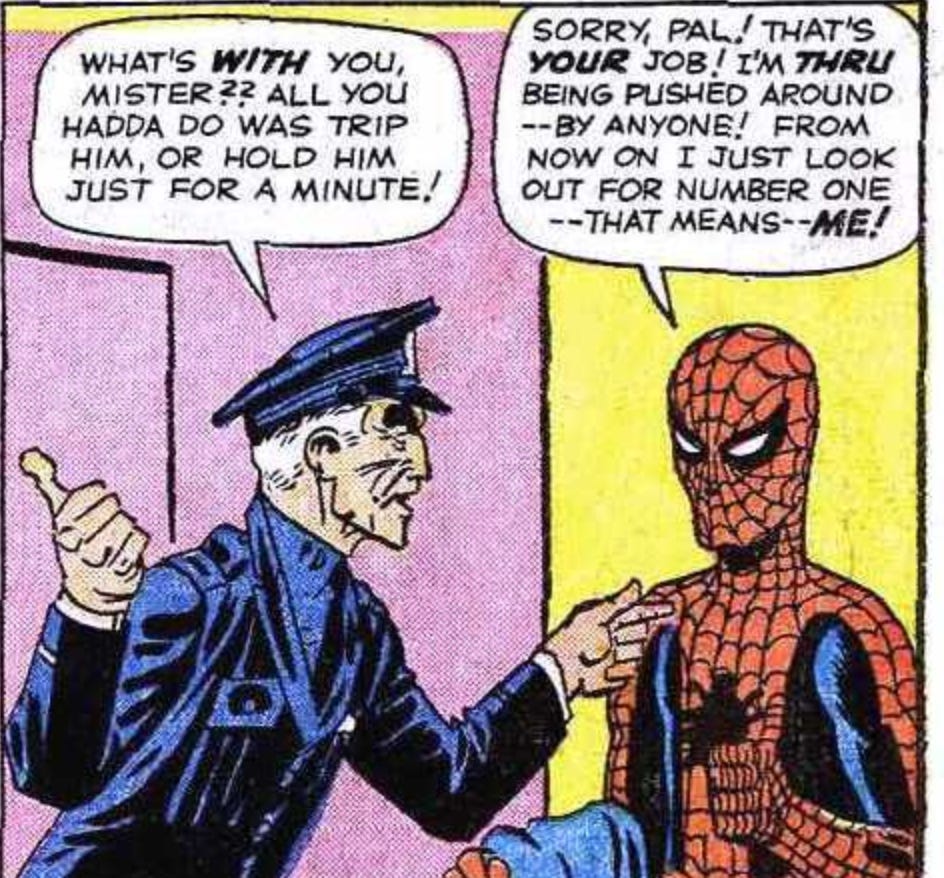
Notice how almost sinister Spider-Man looks in the above panel. Ditko gave him a full-face mask and the narrow slits for eyes are especially off-putting. Compare this to Dick Sprang’s classic image of Batman — round, accessible eyes with an mask that lets us see his broad smile.
Later, Peter’s beloved Uncle Ben is murdered during a break-in. (Peter had earlier said that his Aunt May and Uncle Ben were “the only ones who’ve ever been kind to me. I’ll see to it that they’re always happy, but the rest of the world can go hang for all I care.”) When Spider-Man tracks down the killer, he learns to his horror that it’s the same common thug he let walk right past him.
On its own, Amazing Fantasy No. 15 plays out like an episode of the classic Twilight Zone, which was still on the air. The main character gains mysterious powers but misuses them. He then learns a harsh lesson. Spider-Man’s first appearance ends with this Rod Serling-style narration: “And a lean, silent figure slowly fades into the gathering darkness, aware at last that in this world, with great power there must also come great responsibility.”
The Russo Brothers have stated in interviews that Tom Holland’s Spider-Man isn’t responsible, even indirectly, for his uncle’s death in the MCU. “That would have been a more intense interpretation of the character.” This makes Holland’s Peter Parker a distinctly different character from Ditko and Lee’s. The Spider-Man films starring Tobey Maguire and Andrew Garfield also avoided this direction translation: Maguire’s Peter lets the burglar go because he’d just robbed someone who’d swindled him out of money he’d earned. That’s far more forgivable than comic-book Peter’s callousness. Garfield’s Peter doesn’t let the burglar get away, though he does feel guilty that Uncle Ben was murdered while searching for him after an argument.
When Spider-Man returns in his own title, almost a year later, he’s still somewhat of an anti-hero. He doesn’t stop performing for money because he’s taken his “power and responsibility” lesson to heart. Daily Bugle publisher J. Jonah Jameson has launched a crusade against him that effectively ends his entertainment career. He saves Jameson’s astronaut son, but his motivation is primarily self-interest. He hopes the rescue will salvage his reputation and career. He later tries to join the Fantastic Four but discovers they don’t work for profit. “Who needs you!” he tells them. “I’ll make you guys look like pikers!”
Soon, Peter figures out how to earn money taking photos of himself in action as Spider-Man, and he eventually settles into more traditional heroics when he faces Doctor Octopus and the Sandman. However, he constantly questions whether he is driven more by a craving for action and glory rather than true heroism and responsibility.
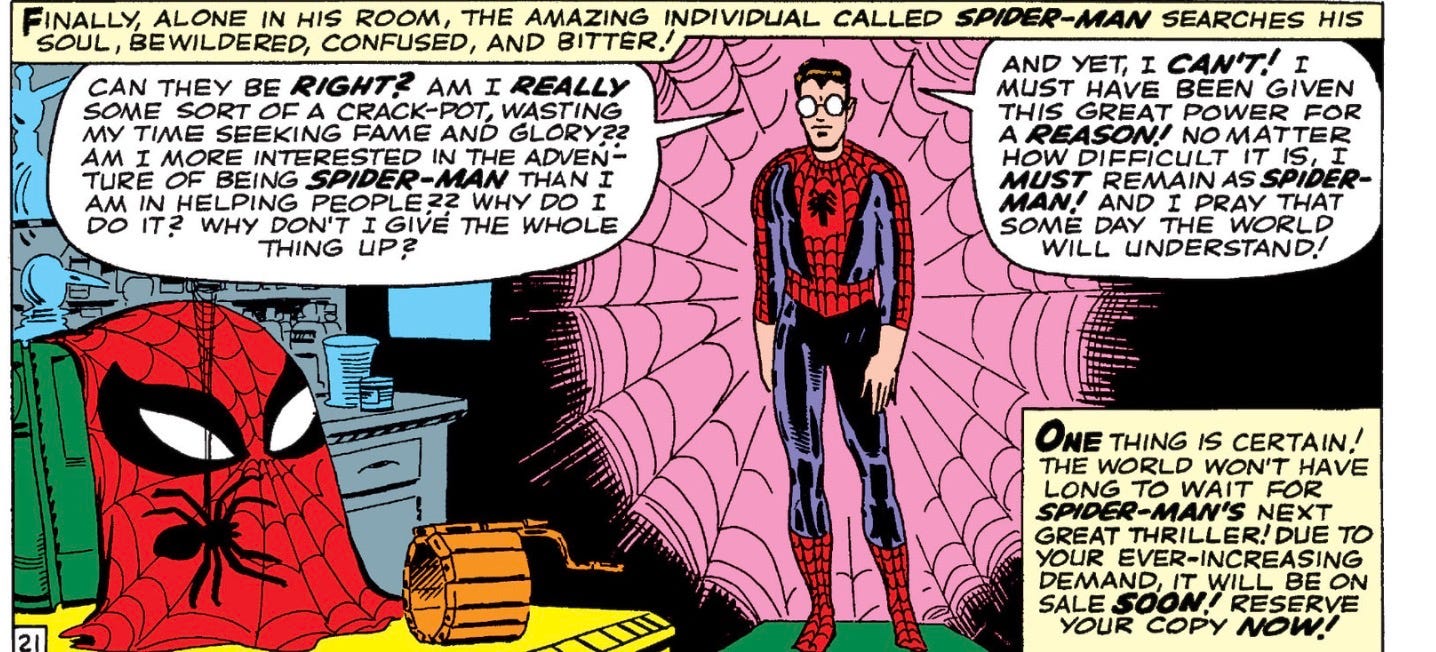
Peter’s internal narration isn’t yet the joking self-deprecating banter we’ve come to expect, but more like Travis Bickle’s journal. Spider-Man as a “grim avenger” might seem absurd now, but it wasn’t a stretch if you only read those early issues. Even his wisecracking remarks when defeating villains have a hardboiled detective edge.
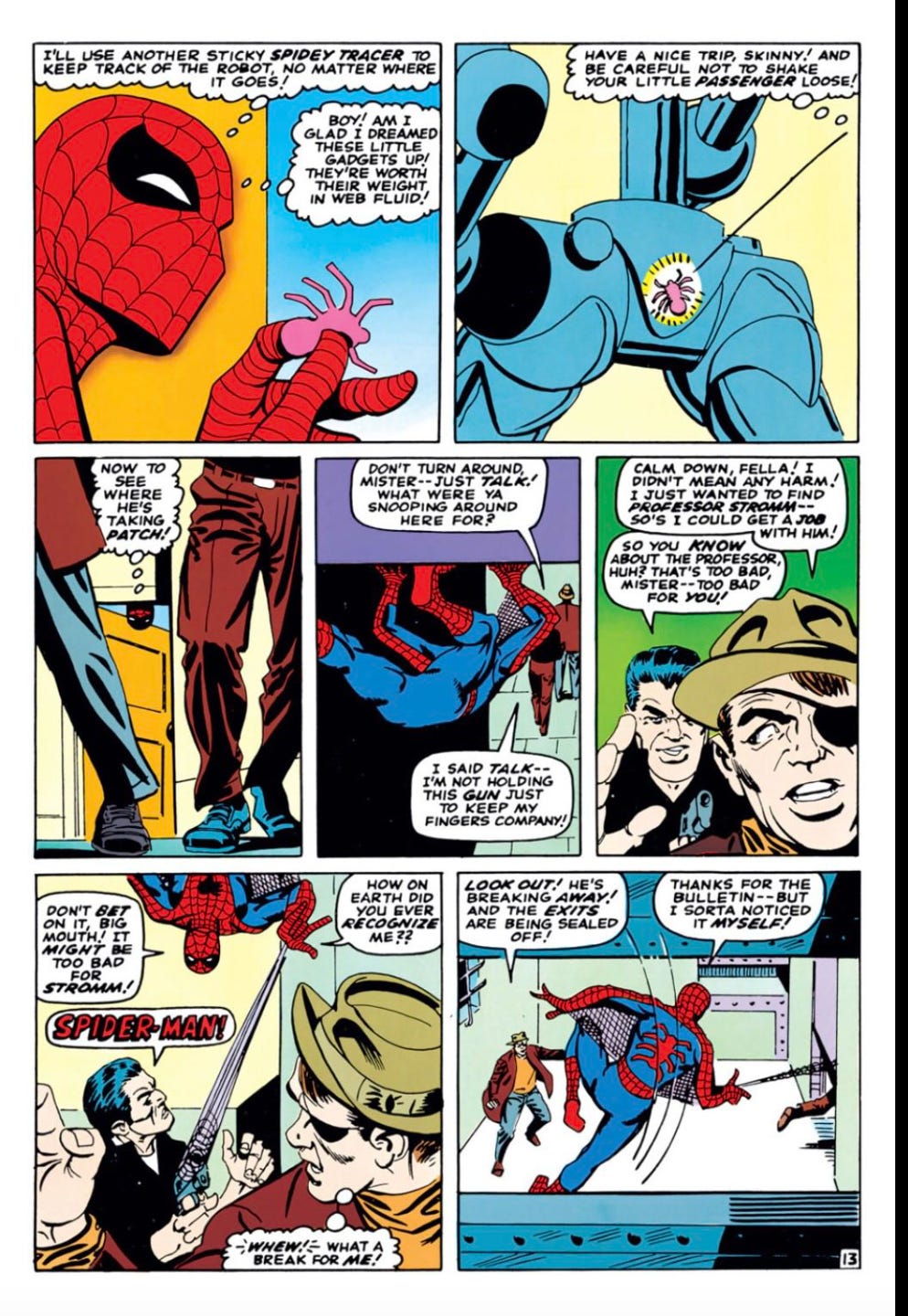
Spider-Man as we know him today starts to emerge when John Romita replaces Steve Ditko as artist in 1966. His Spider-Man is drawn more heroic, less creepy. That’s when Peter Parker starts to become the dashing, slightly adorkable, romantic lead. It’s proven a successful formula, both on the page and on the big screen.
Ironically, Spider-Man’s post-Romita image as an essentially lighthearted character — despite the whole creepy spider thing — has become so set in our minds that when he wears an all-black costume, it’s seen as wrong, a corrupting influence. Batman is the Dark Knight but Spider-Man is forever a “friendly neighborhood” hero.
Summer has arrived, even if the days are now slowly getting shorter again. I’m celebrating with a special summer subscription sale — 40 percent off the usual annual paid subscriber rate. That’s just $30 a year. Thanks to all who have upgraded to paid subscriber status recently.
This week, I paid a less-than-fond farewell to Sen. Lindsey Graham, who died last weekend.
I explored whether mainstream Democrats are genuinely shifting their position on Israel/Gaza or just repeating the failed pro-Iraq War strategy from 2004.

It’s probably a safe bet that John Fetterman will leave the Democratic Party after midterms.
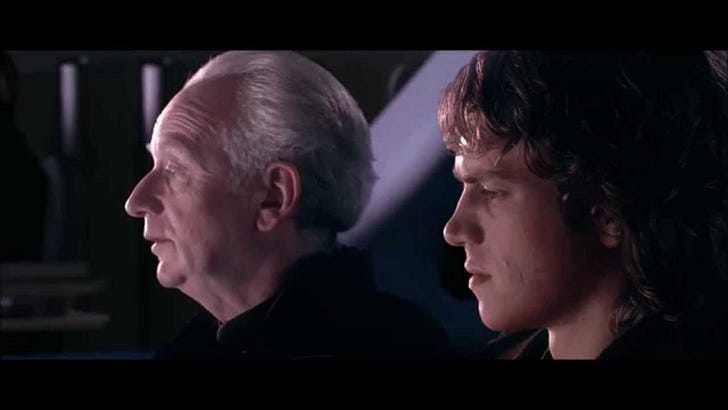
Evan Stern from the Certain Thoughts Substack joined me for a timely discussion of my favorite play, Angels in America.
That’s it for this week. See you on Monday.
Interesting read. I don't watch superhero movies, except Christopher Reeves "Superman" movies, but love the backstory of all of these superheroes. And today, I learned a new to me word - "adorkable", which I guessed means a character who is cute and dorky. Merriam-Webster says "The meaning of ADORKABLE is socially awkward or quirky in a way that is endearing." So I was right!